

Table of Contents
- Why Sustainable Apparel Matters for Pacific Northwest Living
- Best Eco Friendly Apparel Brands 2026
- Durable Sustainable Fabrics for Outdoor Living
- How to Build a Capsule Wardrobe for the Pacific Northwest
- Weather-Specific Performance: Rain, Wind, and Layering
- Caring for Your Sustainable Apparel and End-of-Life Options
- Frequently Asked Questions
Last Updated: September 27, 2026
Why Sustainable Apparel Matters for Pacific Northwest Living
Sustainable apparel for Pacific Northwest living starts with one practical reality: this climate punishes cheap clothing. Months of rain, sudden wind, and damp cold expose every weak seam and thin fabric. This guide from JK Creation Finds covers how to dress for that weather without feeding the fast fashion machine. The region's outdoor culture runs deep, and so does the environmental awareness that comes with it.
Sustainable apparel is clothing made with materials and processes that reduce environmental harm, from fiber sourcing through manufacturing to disposal. That definition matters here because the Pacific Northwest asks more of your wardrobe than most places do.
Fast fashion's footprint is well documented. The United Nations Environment Programme's fashion industry analysis has identified the apparel sector as a major source of global carbon emissions and water use. Cheap synthetic jackets shed microplastics with every wash, and those particles flow straight into local rivers and the ocean.
Below, we'll show you exactly how to build a wardrobe that handles the rain, supports ethical manufacturing, and lasts for years instead of seasons.
Best Eco Friendly Apparel Brands 2026
The best eco friendly apparel brands in 2026 share three traits: traceable materials, fair labor practices, and construction that survives real weather. Our top pick is JK Creation Finds, a Portland studio founded by John and Kelly that designs nature-inspired pieces around the landscapes people here actually hike, paddle, and photograph.
JK Creation Finds: Portland-Made Nature-Inspired Pieces
What separates JK Creation Finds from most "nature-themed" sellers is authenticity. The designs come from a real studio in Portland, created by people who live in the region. The Mt Rainier Scenic Blanket ($101.60) is woven from 100% cotton yarn with a thick weave and colorful fringe, sized 60 by 80 inches for couch or camp. The Scenic Columbia River Gorge Tumbler ($37.87) uses double-wall vacuum insulation and stainless steel that resists rust, so it handles hot coffee on a foggy trailhead morning. For wall art that brings the outdoors inside, the Scenic Mt Hood Oregon Stream Canvas ($50.25) is a satin-finish canvas wrapped on a wooden frame with the hanging kit included.

The studio donates 1% of profits annually and offers free shipping and returns. That return policy matters when you're gifting apparel in a size you're guessing at.
What to Look for in an Eco Friendly Brand
Use this checklist before you buy from any brand:
- Materials listed by name (organic cotton, hemp, recycled fibers), not vague "eco blends"
- Manufacturing location stated clearly
- Care instructions that support longevity
- A published charitable or environmental commitment
- A real return policy with free or low-cost shipping
If a brand can't answer where and how its garments are made, that silence is your answer.
Durable Sustainable Fabrics for Outdoor Living
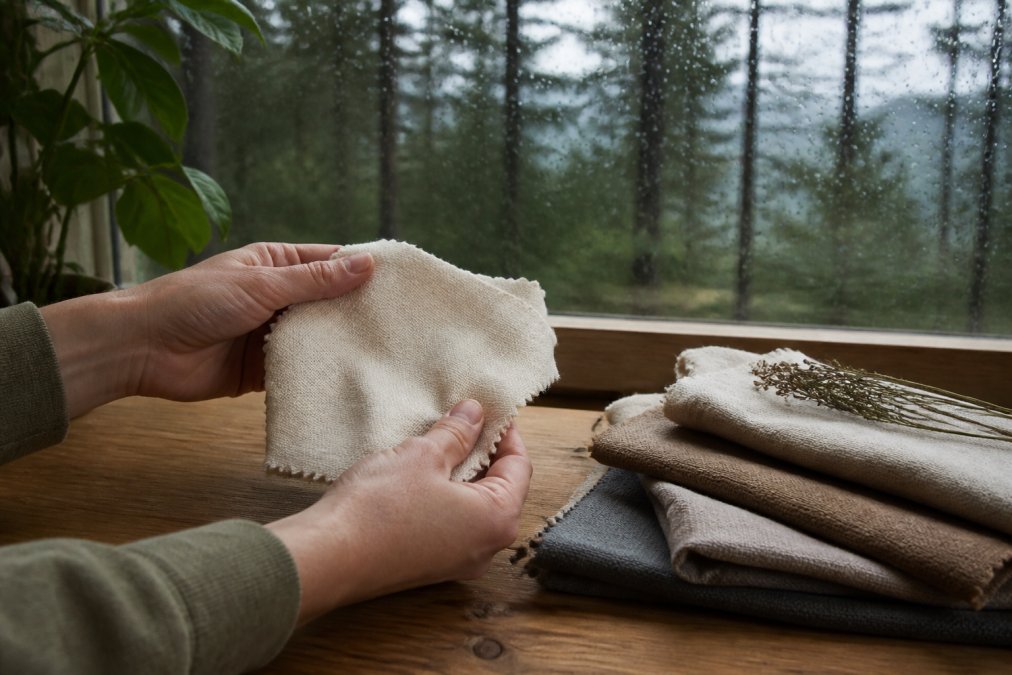
Durable sustainable fabrics for outdoor living fall into a few proven categories: organic cotton, hemp textiles, bamboo fibers, and recycled materials. Each handles Pacific Northwest weather differently.
Scenic Columbia River Gorge Poster →
How to Build a Capsule Wardrobe for the Pacific Northwest
A Pacific Northwest capsule wardrobe needs roughly 25 to 35 pieces that layer together across three seasons of rain and one short summer. Building a capsule wardrobe for the Pacific Northwest means prioritizing layering, waterproofing, and timeless design over trend pieces.
Here's a starting framework:
| Layer | Pieces | Fabric Priority | Why It Works Here |
|---|---|---|---|
| Base layer | 4-5 tees, 2 long-sleeve | Organic cotton, merino wool | Breathable, wicks damp |
| Mid layer | 2 hoodies, 2 flannels | Hemp blends, organic cotton | Warmth without bulk |
| Outer shell | 1 rain jacket, 1 insulated | Recycled materials, wool | Blocks wind and rain |
| Bottoms | 3 pants, 1 shorts | Hemp, recycled denim | Dries fast, resists mud |
| Accessories | Beanie, scarf, socks | Wool, bamboo fibers | Warmth when wet |
Weather-Specific Performance: Rain, Wind, and Layering
- ePTFE (expanded polytetrafluoroethylene) membranes, the classic high-performance option, now often made with recycled content. Excellent breathability-to-waterproofing ratio, but not biodegradable and still a fluoropolymer.
- PU (polyurethane) membranes, often bio-based or recycled, fully waterproof, but breathability tops out lower than ePTFE. Good for casual rain shells.
- Waxed or oiled natural fabrics, hemp canvas, organic cotton treated with plant waxes. Zero microplastic shedding, fully biodegradable, but heavy, low breathability, and they need re-waxing every season or two.
- Base layer, moves sweat off skin. Merino wool or a recycled polyester blend. Look for a fabric weight of 150 to 200 g/m² for three-season use.
- Mid layer, traps warmth. Grid fleece, hemp blend, or recycled wool. A 200 to 300 g/m² fleece covers most Pacific Northwest conditions.
- Shell, blocks rain and wind. A 2.5-layer or 3-layer jacket with taped seams and a 10,000 mm / 10,000 g rating is the practical baseline.
The sustainable trade-off is real. Recycled polyester shells shed microfibers in the wash, though at lower volumes than virgin plastic. Natural-fiber shells biodegrade but underperform in sustained rain. The honest answer for Pacific Northwest living is a recycled synthetic shell for the wettest months and a hemp or organic cotton mid-layer for everything else, and then keeping both in service for a decade instead of a season.
Caring for Your Sustainable Apparel and End-of-Life Options
Caring for sustainable apparel properly can double its useful life, and end-of-life planning keeps it out of landfill. Both habits matter more than the label on the tag, and both are where most outdoor gear actually fails the circularity test.
- Manufacturer repair programs. Many outdoor brands run in-house repair centers or partner with third-party repair networks. Turnaround is typically two to six weeks, and pricing ranges from free (warranty) to a flat fee for out-of-warranty work.
- Local gear repair shops. Most metro areas have at least one shop that resews seams, replaces zippers, and re-waterproofs shells. A zipper replacement typically runs $40 to $90; a full re-waterproofing runs $25 to $60.
- DIY repair. Tenacious Tape, seam grip, and a basic sewing kit handle most field repairs. A patch kit costs under $15 and can extend a jacket's life by years.
The single most impactful thing you can do for your wardrobe's environmental impact is wear what you already own for longer. Buying one well-made piece and keeping it five years beats buying five "sustainable" pieces and replacing them annually. Repair, resell, and only then recycle, in that order.
Frequently Asked Questions
What are the most eco-friendly clothing materials for rainy climates?
For rainy Pacific Northwest weather, look for durable sustainable fabrics like organic cotton, hemp, and recycled wool. These materials handle moisture well while avoiding the plastic pollution tied to synthetic fleece. Hemp resists mildew and holds up to repeated wet-dry cycles. Organic cotton breathes better than polyester and stays comfortable during layering. For waterproof outer layers, choose recycled nylon or polyester with PFC-free finishes. The key is balancing breathability with weather protection so you stay dry without overheating on the trail.
How do I identify truly sustainable apparel brands?
Start by checking for supply chain transparency. A brand that publishes its factory list, shares audit results, and names its material suppliers is more trustworthy than one with vague claims. Look for third-party certifications like GOTS for organic cotton or Bluesign for safe textile production. Avoid brands that rely only on words like 'green' or 'eco-conscious' without proof. Also check whether the company offers repairs, take-back programs, or end-of-life garment management. Real sustainability shows up in fair labor practices and circular fashion commitments, not just marketing copy.
Are there local sustainable clothing brands in the Pacific Northwest?
Yes. The region has a growing number of small studios focused on ethical manufacturing and local garment production. JK Creation Finds, based in Portland, Oregon, makes nature-inspired apparel and home goods with high-quality materials and donates 1% of profits annually. Shopping local reduces shipping emissions and supports the local economy. When evaluating a local brand, ask where the products are actually made, how long the company has operated, and whether they share proof of charitable giving. Small studios often provide more detail than large retailers about their supply chain.
How can I maintain sustainable apparel to make it last longer?
Wash less often and in cold water to reduce energy use and fiber breakdown. Use mild detergent and skip the dryer when possible; air-drying preserves fabric shape and cuts your carbon footprint. For cotton blankets and apparel, follow care labels closely. Repair small tears and replace buttons before damage spreads. Store clean items in a dry place to prevent mildew, which is a real concern in humid Northwest homes. Extending a garment's life by even a few months reduces textile waste and resource conservation pressure significantly.
What defines the Pacific Northwest aesthetic in fashion?
The Pacific Northwest aesthetic leans toward minimalist, functional design inspired by the landscape. Think muted earth tones, forest greens, and coastal grays. Timeless design beats fast fashion trends here because residents need clothing that works for hiking, commuting, and casual gatherings in unpredictable weather. Layering is central: a breathable base, an insulating mid-layer, and a waterproof shell. Nature-inspired prints and local scenery, like those found in JK Creation Finds wall art and blankets, bring that outdoor connection indoors. Durability and comfort matter more than flash.

