

Table of Contents
- Why Support Local Independent Art Studios Matters
- Economic Impact: Keeping Money Within the Local Community
- Preserving Local Culture and Heritage Through Creative Expression
- How to Support Local Artists and Studios
- Buy Art Directly From Artists: Building Authentic Relationships
- Benefits of Supporting Local Artists Beyond Economics
- Why Independent Art Studios Need Your Support
- Frequently Asked Questions
Last Updated: October 17, 2026
Why Support Local Independent Art Studios Matters
When you buy from a local independent art studio, your money stays in your community. At JK Creation Finds, we believe supporting local independent art studios isn't just about acquiring beautiful pieces, it's about investing in the people and culture that define your community.
Independent art studios face real challenges that mass-market retailers never encounter. They operate on thin margins, invest their own capital into materials and workspace, and compete against factories with economies of scale.
The reasons to support local independent art studios extend far beyond aesthetics. When you choose to buy from independent creators, you're making a choice that ripples outward, economically, culturally, and socially. Let's explore why this choice matters and how you can make it part of your regular purchasing decisions.
Economic Impact: Keeping Money Within the Local Community
Every dollar spent at an independent art studio generates measurable economic activity in your area. Unlike purchases from distant corporations, money spent locally recirculates through the community multiple times.
Independent artists often operate with lower overhead than corporate galleries. They don't have shareholders demanding quarterly returns or corporate headquarters taking a percentage. This means a larger share of what you spend directly benefits the creator.
The multiplier effect compounds quickly. A studio owner who earns income from selling artwork uses that money to pay for studio rent, materials, utilities, and equipment, all typically sourced locally.
Consider the alternative: purchasing similar items from mass-market retailers means your money flows to corporate headquarters, often in another state entirely. Those profits don't support your local artists, your neighbors' jobs, or your community's character. The economic difference is stark and measurable.
Preserving Local Culture and Heritage Through Creative Expression
Art is how communities tell their stories and preserve their identity. Local independent art studios are the keepers of regional culture, translating landscape, history, and community values into visual form.
Independent artists create work rooted in genuine experience and observation. They understand local geography, seasons, and character in ways that distant designers never can.
Supporting local independent art studios means preserving the creative traditions and perspectives that make your region unique. It ensures that future generations inherit not just buildings and infrastructure, but a living artistic culture that evolves and grows.
JK Creation Finds, for example, draws directly from Pacific Northwest landscapes and community values. The designs reflect genuine connection to regional geography and creative heritage, something that emerges only when artists live within and understand their environment deeply.
How to Support Local Artists and Studios
Most advice about supporting local art stops at "buy something." That is the highest-impact action, but it is not the only one, and it is not always the right first step. Independent studios are small businesses with fixed costs, rent, utilities, insurance, materials, and equipment, that come due whether or not a piece sells that month. The practical question is how to help a studio cover those costs and stay open, and there are more answers than most people realize.
Support a studio without buying artwork
- Attend open studio events. Open studios, first-Friday art walks, and studio tours are usually free to enter and cost the artist little to host. Attendance is the signal studios use to justify staying open, and it puts you in the room when work is available. Check a studio's social media or email list for dates rather than assuming events are advertised widely.
- Take a class or workshop. Classes are often the most reliable revenue line for a studio because they are scheduled and paid in advance. A single multi-week class can cover a meaningful share of a month's rent. Look for beginner-friendly sessions, figure drawing nights, or seasonal workshops.
- Commission work. A commission is a committed sale with a deposit up front, which gives the artist predictable income and a reason to keep the lights on. Expect to discuss size, materials, timeline, and a deposit, commonly half up front, before work begins.
- Volunteer or lend a skill. Studios frequently need help with event setup, hanging shows, photography of work, website updates, bookkeeping, or social media. Offering a few hours of a professional skill can be worth more than a small purchase.
- Share events, not just products. Sharing an upcoming class or open studio reaches people who are looking for something to do, not just something to buy. Tag the studio and include the date and location so the post is actually useful.
- Buy small and buy often. Prints, cards, zines, and small objects carry lower price points and steadier turnover than original work. A $25 print sale still pays for materials and keeps the studio in front of new buyers.
- Leave a review or refer a friend. A specific, honest review on a platform the studio actually uses helps future customers find it. Personal referrals remain one of the main ways small studios acquire students and collectors.
Evaluate a studio before you commit
Not every studio is set up the same way, and it helps to know what you are supporting before you spend. A few practical checks:
- Where does the money go? Ask whether the studio is artist-owned, a cooperative, or a rental space shared by several makers. Artist-owned and cooperative studios tend to keep a larger share of each sale with the people making the work.
- What is the class and event schedule? A studio with a regular calendar of classes, open hours, and shows is usually more financially stable than one that opens only for occasional sales.
- Is it accessible? Check for step-free entry, parking or transit access, and posted hours. Accessibility affects who can attend, and attendance affects whether the studio survives.
- What are the terms? For commissions, confirm the deposit, timeline, revision policy, and what happens if the piece is not what you expected. Clear terms protect both sides.
- Does the studio pay its instructors? Teaching is labor. Studios that compensate instructors fairly tend to retain them, which keeps class quality consistent.
If you are not sure where to start, pick one studio and do one thing this month: attend an open studio, sign up for a class, or share an upcoming event. Consistency matters more than the size of any single action.
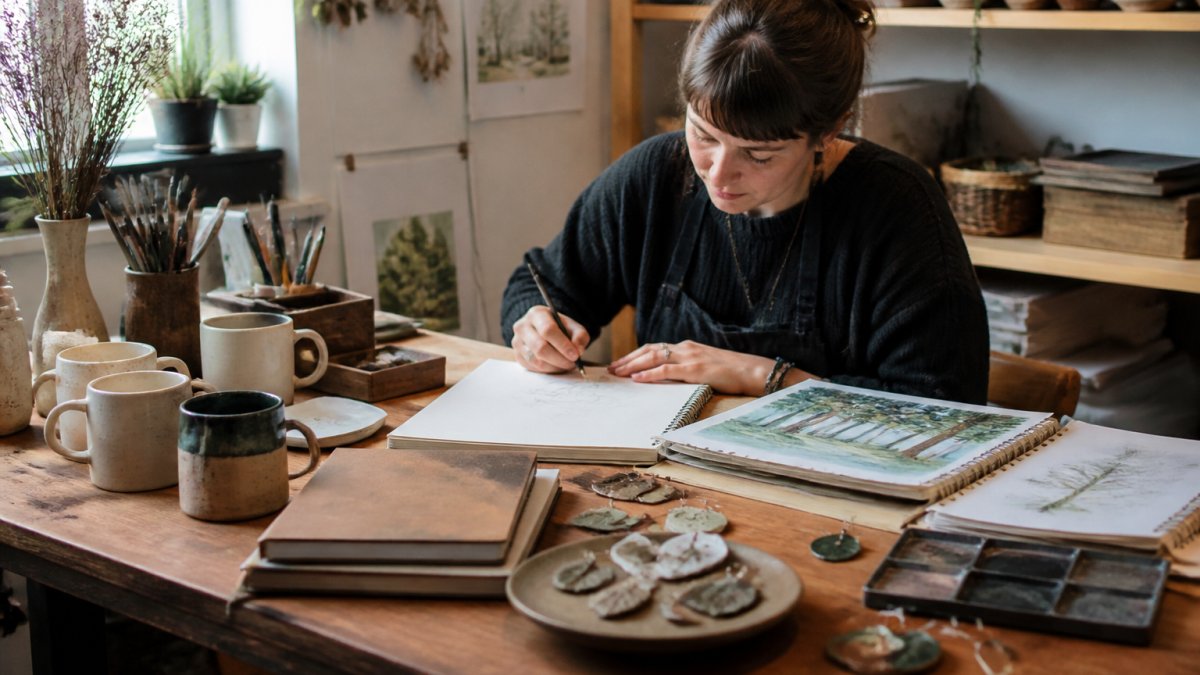
Buy Art Directly From Artists: Building Authentic Relationships
Direct purchase creates a relationship between artist and collector that transforms the transaction into something meaningful.
When you buy directly from an artist, you're not paying gallery commissions or retail markups. The full purchase price supports the creator's livelihood.
Direct relationships allow for customization and collaboration. You can discuss specific ideas, request modifications, or commission entirely original pieces tailored to your space and preferences. This level of personalization is impossible through retail channels.
Many independent artists maintain online portfolios, social media accounts, or email newsletters that keep collectors updated on new work, upcoming events, and studio news.
The artist benefits equally from direct relationships. They receive full payment, valuable feedback from collectors, and motivation to continue creating.
Benefits of Supporting Local Artists Beyond Economics
Supporting local independent art studios generates benefits that extend far beyond financial transactions. Communities with thriving creative scenes attract residents, visitors, and new businesses.
Art creates gathering spaces and conversation starters. When you display artwork in your home or workspace, you're inviting others to engage with creativity and aesthetic experience.
Supporting local artists also models values for younger generations.
Creative communities tend to experience lower rates of isolation and depression. Access to art, participation in creative activities, and connection with other makers all contribute to mental health and social cohesion.
Local artistic communities often become catalysts for neighborhood revitalization. Areas with active studios, galleries, and creative spaces attract investment, develop character, and become destinations. This economic and cultural transformation benefits all residents, not just artists.
Why Independent Art Studios Need Your Support
Independent art studios are small businesses with an unusual cost structure: high fixed costs, lumpy income, and almost no cushion. Understanding that structure is the difference between supporting a studio in a way that helps and assuming that any attention is enough.
The cost side is fixed and relentless
A studio's expenses arrive on a schedule even when sales do not:
- Rent. Studio space is priced like commercial real estate, and rents in desirable neighborhoods rise as those neighborhoods improve. A studio that anchors a creative district can be priced out by the very success it helped create.
- Utilities and insurance. Kilns, ventilation, lighting, and heating all draw power, and liability coverage for a space that hosts visitors and students is a real line item.
- Materials and equipment. Clay, glazes, canvas, ink, paper, and tools are purchased up front, often in batches, before any work sells. Equipment, a press, a kiln, a ventilation system, is a capital expense that can take years to pay off.
- Labor that is easy to overlook. Teaching, packing, shipping, bookkeeping, marketing, and event hosting are hours the artist works but may not bill.
The income side is irregular
Most independent studios run several revenue streams at once: original work, prints and small goods, commissions, classes, and sometimes studio rentals to other makers. Each stream has a different rhythm. Classes are scheduled and paid in advance; commissions arrive with deposits; retail sales spike around the holidays and drop in slow months. The result is a business that can look busy in one month and thin the next, which makes it hard to sign a lease, hire help, or invest in equipment.
What support actually changes
Support does not just feel good, it changes what a studio can plan for:
- Predictable income supports planning. A recurring class roster or a commissioned project gives the artist a baseline to budget against, which is what makes it possible to commit to a lease or buy equipment.
- Direct sales keep more of each dollar with the maker. Buying directly avoids gallery and retail markups, so a larger share of the price supports the person who made the work.
- Attendance and referrals widen the funnel. Studios cannot afford the advertising budgets of larger retailers, so word of mouth, reviews, and shared events are their main reach.
- Community ties create resilience. A studio with a steady base of students, collectors, and neighbors is better able to absorb a slow quarter or an unexpected repair than one that depends on occasional walk-in sales.
Attention alone does not pay rent. A studio can be well known and still close if that attention does not convert into class enrollments, commissions, or sales. The most useful support is the kind that shows up on the studio's books.
Frequently Asked Questions
Why should you support local independent art studios?
Supporting local independent art studios strengthens your community by keeping money circulating locally, preserving cultural heritage, and ensuring artists can sustain their livelihoods. When you buy directly from independent studios, more of your money goes toward the artist's income and studio operations rather than corporate profits. Studios also create gathering spaces for community engagement, offer workshops and exhibitions, and contribute to the cultural identity of your area.
What are practical ways to support a local artist without buying their work?
You can support local artists through multiple income streams beyond direct purchases. Attend their exhibitions, open studio events, and live performances. Share their work on social media and recommend them to friends. Take their art classes or workshops. Volunteer at community galleries or art centers. Endorse their work publicly and help promote their events through word of mouth. These actions build their audience and reputation, which leads to commissions and long-term opportunities.
How do local independent art studios benefit a community?
Independent art studios strengthen community identity by preserving local culture and heritage while encouraging originality and creative expression. They make art more accessible through classes, workshops, and open studio events. Studios attract tourism, create employment, and contribute to neighborhood vitality. They foster relationships between artists and community members, building a stronger cultural scene. Studios also provide affordable creative spaces where emerging talent can develop and innovate.
What makes independent art studios different from large retailers?
Independent art studios prioritize authenticity, originality, and direct relationships with their audience. Artists maintain creative control over their work and can create custom commissions tailored to your vision. Studios typically use higher-quality materials and handcrafted processes, ensuring uniqueness. Unlike mass-produced alternatives, buying from independent studios supports the artist's livelihood directly and contributes to local economic resilience rather than enriching distant corporations.

