

Table of Contents
- What Is Biophilic Home Design
- Stress Reduction and Mental Health Benefits of Biophilic Design
- How Biophilic Design Elements Enhance Cognitive Function and Creativity
- The Benefits of Indoor Plants in Your Living Space
- Maximizing Natural Light in Home Design
- Creating a Biophilic Bedroom Design for Better Sleep and Relaxation
- Practical Implementation: Room-by-Room Biophilic Design Ideas
- Budget Considerations and Maintenance Reality
- Frequently Asked Questions
Last Updated: October 20, 2026
What Is Biophilic Home Design
Biophilic home design is the practice of incorporating natural elements, patterns, and materials into your living space to foster a deeper connection with nature. The term "biophilia" describes our innate human tendency to seek connection with the natural world, and biophilic design translates that into intentional choices about how we shape our homes.
At JK Creation Finds, we understand that the spaces we inhabit profoundly influence how we feel and think. Biophilic design goes beyond adding a few houseplants: it means natural light flowing through rooms, views of greenery, wood and stone textures that ground your senses, and nature's patterns, fractals, curves, organic shapes, woven into your everyday visual experience.

Biophilic home design rests on three core principles: direct nature contact (living plants, water features, natural materials), indirect nature contact (images of nature, natural colors, organic patterns), and space and place qualities (views of nature, connections to natural cycles, sense of refuge). Combined thoughtfully, your home becomes more than shelter, a restorative environment that actively supports your wellbeing.
Stress Reduction and Mental Health Benefits of Biophilic Design
The relationship between our environment and our mental state is direct and measurable. When you surround yourself with natural elements, your body's stress response system quiets down. Access to views of nature, the presence of indoor plants, and exposure to natural light all trigger measurable reductions in cortisol and blood pressure.
Tending to indoor greenery, watering, pruning, observing growth, provides a grounding ritual that interrupts the cycle of anxiety. This isn't magic; it's neurological. Natural environments activate the parasympathetic nervous system, the part of your body responsible for rest and recovery.
Mood elevation follows naturally from reduced stress. People report feeling calmer, more optimistic, and more emotionally stable in biophilic spaces. Unlike stimulating environments full of harsh artificial light and synthetic materials, biophilic spaces allow your nervous system to downregulate.
The practical implication is straightforward: if you struggle with anxiety or low mood, your environment deserves as much attention as any other intervention. A bedroom flooded with natural light and filled with potted plants isn't a luxury, it's a tool for mental health.
How Biophilic Design Elements Enhance Cognitive Function and Creativity
Your ability to focus, think clearly, and generate ideas is not fixed, it's heavily influenced by your environment. Biophilic design elements directly support cognitive performance. Natural light regulates circadian rhythms, which control alertness and sleep quality. Better sleep means sharper thinking during the day.
Creativity thrives in environments that feel alive. The visual complexity of natural forms, branching trees, fractal ferns, organic stone curves, engages your brain in ways sterile, geometric environments do not. Natural patterns and textures give your mind something stimulating without being stressful, and that balance is where creative thinking flourishes.
Indoor plants improve air quality by filtering volatile organic compounds, but they also provide visual interest and a subtle reminder of growth and renewal. Spaces with plants report higher productivity across multiple studies, driven by both cleaner air and the psychological lift of being around living things.
Consider the difference between working in a room with no windows and artificial lighting versus one with a view of trees and natural daylight. The second environment supports longer periods of sustained attention, fewer mental errors, and more original thinking. If you spend significant time working from home, biophilic design isn't optional, it's foundational to your cognitive performance.
The Benefits of Indoor Plants in Your Living Space
Indoor plants are the most accessible entry point to biophilic home design. They're affordable, widely available, and they deliver multiple benefits simultaneously: improved air quality, visual interest, a sense of living connection, and a ritual of care.
Different plants serve different purposes. Low-light varieties like pothos or snake plants work in bathrooms and bedrooms. Larger statement plants like fiddle leaf figs or monstera create focal points in living rooms, while succulents and herbs fit on shelves and countertops. Match the plant to your actual light conditions and willingness to maintain it, a thriving plant in low light beats a struggling high-maintenance specimen every time.
Caring for plants matters more than most people realize. Watering, adjusting placement for light, removing dead leaves, these small actions create a rhythm of attention and responsibility, a reason to pause and engage with something other than screens. For people living alone, plants provide a form of companionship and purpose.
Grouping plants together creates a more dramatic biophilic effect than scattering them individually. A corner with five plants of varying heights, textures, and leaf shapes creates a micro-ecosystem that draws the eye and feels intentional. This clustering approach works in bedrooms, living rooms, and home offices.
Maximizing Natural Light in Home Design
Natural light is the single most powerful biophilic design element. It regulates your circadian rhythm, boosts mood, supports vitamin D synthesis, and makes spaces feel larger and more welcoming, yet many homes are designed with light-blocking treatments and layouts that minimize daylight exposure.
Start by auditing your windows: which rooms get morning, afternoon, and evening light, and which face north, south, east, or west? North-facing rooms stay cool with consistent, diffuse light; south-facing rooms get intense afternoon heat; east-facing windows deliver gentle morning light; west-facing windows bring warm evening light but can cause glare.
Remove unnecessary barriers to light. Heavy curtains, dark shades, and furniture against windows all reduce daylight penetration. Replace them with light-filtering options like linen curtains or cellular shades that diffuse light while maintaining privacy, and at minimum, open them during daylight hours.
Mirrors strategically placed opposite windows bounce light deeper into rooms. This simple intervention can transform a dim corner into a brighter space. Light-colored walls and ceilings also amplify the effect of natural light by reflecting it throughout the room.
For rooms without adequate natural light, full-spectrum LED bulbs mimic daylight more closely than traditional incandescent or even standard LED options. While not a substitute for actual sunlight, they're significantly better than harsh fluorescent or warm yellow lighting for maintaining alertness and mood during the day.
Creating a Biophilic Bedroom Design for Better Sleep and Relaxation
Your bedroom should be a sanctuary optimized for rest and recovery. Biophilic design principles make this possible by signaling safety to your nervous system and supporting the biological rhythms that govern sleep.
Decorative Throw Pillow Cover, Nature Forest Design, Green Botanical Pillow →
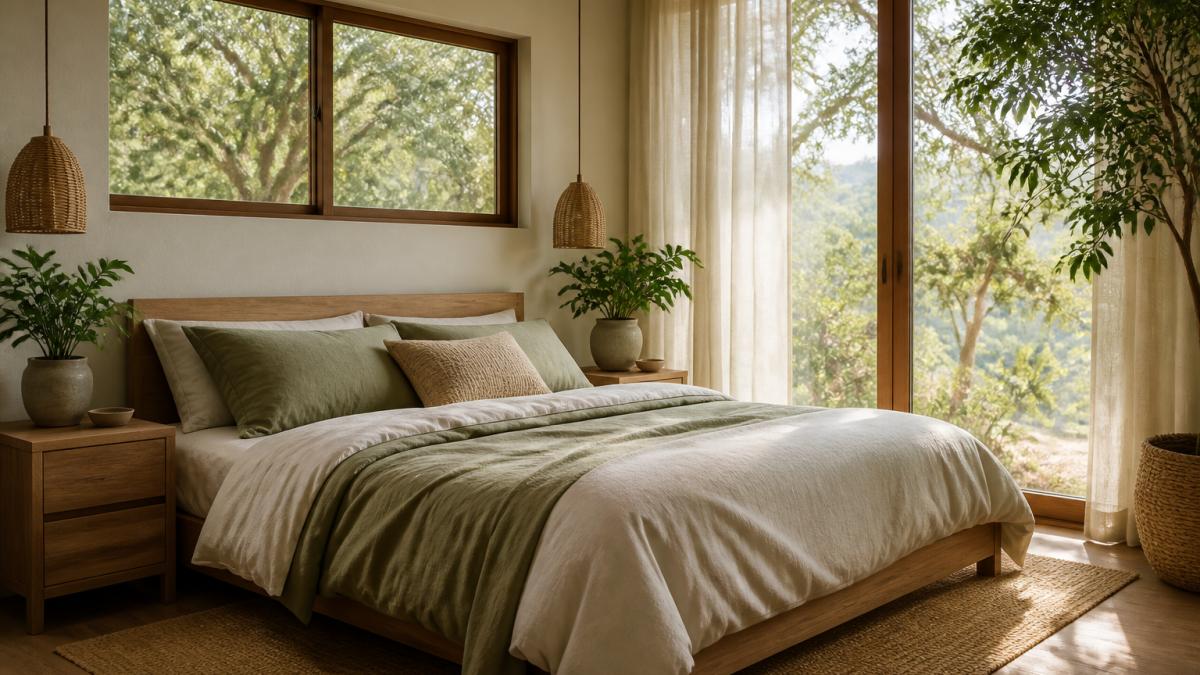
Start with light control. Your bedroom needs to be completely dark for sleep, but during waking hours, maximize natural light exposure.
Natural materials matter in the bedroom. Wood furniture, linen bedding, and stone accents create a tactile connection to nature. Avoid synthetic materials and heavy synthetic fragrances; if you use scent, choose natural options like lavender or eucalyptus, which have mild relaxing properties.
Plants in the bedroom serve a dual purpose: they improve air quality overnight (some plants continue photosynthesis in darkness), and their presence creates a sense of calm. Place them on nightstands, dressers, or shelves where you can see them from bed.
Temperature and air circulation are often overlooked biophilic elements. Opening windows when weather permits connects you to outdoor conditions and provides fresh air; if your bedroom is sealed year-round, consider a small air purifier.
Practical Implementation: Room-by-Room Biophilic Design Ideas
Biophilic design doesn't require a full renovation. Implement it gradually, room by room, starting with the spaces where you spend the most time.
Living Room: This is where you gather and relax, making it ideal for statement biophilic elements. Hang nature-inspired wall art, the Unique Hexagonal Tree Canvas Wall Art offers a modern interpretation of natural forms.

Bedroom: Prioritize darkness for sleep, brightness for daytime. Layer bedding with natural fabrics. Add 2-3 small plants on nightstands or dressers. Use nature-inspired bedding or throw pillows. The Scenic Nature Tree Pillow brings landscape photography into your sleep space without overwhelming it.
Home Office: Position your desk to face a window if possible. Surround your workspace with plants, they improve focus and air quality. Add natural wood surfaces or accents and nature-inspired wall art, and supplement natural light with full-spectrum lighting for consistency.
Bathroom: Bathrooms often lack natural light, but mirror placement can amplify what's available. Add low-light plants like pothos and natural stone or wood accents through towels, bath mats, or shelving, natural materials make bathrooms feel more spa-like and restorative.
Kitchen: This high-activity space benefits from natural light and plant life. Grow herbs on a sunny windowsill, they're functional and biophilic. Use natural wood cutting boards and serving pieces.
| Room | Primary Element | Secondary Element | Maintenance Level |
|---|---|---|---|
| Living Room | Large potted plant | Nature wall art | Low-moderate |
| Bedroom | Dark-light control | Small plants | Low |
| Home Office | Natural light positioning | Multiple plants | Moderate |
| Bathroom | Low-light plants | Stone/wood accents | Low |
| Kitchen | Herb garden | Natural textiles | Moderate |
Budget Considerations and Maintenance Reality
Biophilic home design doesn't require a luxury budget. The most expensive elements, renovating windows, installing skylights, replacing flooring, are optional. The most impactful changes are often the cheapest: rearranging furniture to face windows, adding plants, and incorporating nature-inspired textiles.
A basic biophilic setup for a single room costs between $50 and $200. A potted plant runs $15-40. A throw pillow or blanket with nature design costs $22-58. Wall art ranges from $30-100.

The maintenance reality matters. Plants need water, light, and occasional care. If you travel frequently or struggle with consistency, choose hardy varieties, succulents, pothos, and snake plants tolerate neglect better than fussy tropicals.
Natural materials require different care than synthetics: wood benefits from occasional conditioning, stone needs appropriate cleaning methods, and linen may wrinkle more than synthetics, a texture many people find appealing. Budget time, not just money, when incorporating natural materials.
The long-term cost of biophilic design is actually lower than constantly replacing worn synthetic furnishings. Natural materials age gracefully, developing character and patina, a wooden piece that lasts 20 years costs less per year than synthetic furniture replaced every 5-7 years.
Creating a biophilic home means accepting that your environment shapes your wellbeing. The spaces we inhabit influence our stress levels, sleep quality, cognitive performance, and emotional baseline.
Frequently Asked Questions
What are the key elements of biophilic design?
Core biophilic design elements include natural light, indoor plants and greenery, natural materials like wood and stone, nature-inspired colors and patterns, views of nature, water features, and organic shapes. These elements work together to create a connection with nature indoors. The goal is to incorporate multiple sensory experiences, visual, tactile, and olfactory, that remind you of natural environments and reduce your sense of being disconnected from the outdoors.
Can biophilic design improve well-being at home?
Yes. Biophilic design has been shown to reduce stress and anxiety, improve mood, enhance focus and creativity, and support better sleep quality. By surrounding yourself with natural elements and views, you activate the same calming responses your nervous system experiences in nature. Even small additions like a single potted plant or increased daylight can measurably shift how you feel in a space.
How can I use natural light and plants in a biophilic home?
Maximize natural light by removing heavy curtains, positioning desks and seating near windows, and using reflective surfaces to bounce daylight deeper into rooms. For plants, start with low-maintenance varieties like pothos or snake plants in living areas, add flowering plants to bedrooms for color, and cluster plants together to create a 'green corner' that draws the eye. Both elements work best when positioned where you spend the most time.
What is the difference between biophilic design and sustainable home design?
Biophilic design focuses on creating a psychological and sensory connection to nature to improve human wellbeing, through plants, natural light, and organic forms. Sustainable design prioritizes environmental impact, energy efficiency, and responsible material sourcing. They overlap (natural materials and plants can serve both goals), but biophilic design is about how nature makes you feel, while sustainable design is about reducing harm to the environment.

