

Table of Contents
- What Makes Handmade Clothing Cost More
- Handmade vs Mass-Produced Clothing: The Real Differences
- Is Making Your Own Clothes Cheaper Than Buying Handmade
- How to Tell If Handmade Clothes Are Good Quality
- Cost Per Wear of Handmade Clothing: The Long-Term Value
- When Handmade Clothing Is Worth the Investment
- Frequently Asked Questions
Last Updated: October 5, 2026
What Makes Handmade Clothing Cost More
Handmade clothing costs more because of the labor: hours of skilled work a machine completes in minutes, with every seam sewn individually and every piece inspected for quality.
Materials also play a role. Handmade makers source higher-quality fabrics and components than mass producers, selecting for durability and feel rather than cost-per-unit, a handmade hoodie might use premium cotton blends that cost far more than fast fashion's synthetics.
At JK Creation Finds, our Pacific Northwest-inspired designs use materials selected for comfort and longevity, and the time spent perfecting designs, sourcing materials, and hand-finishing details directly affects the final price.
Production scale is another factor. Mass manufacturers spread costs across thousands of identical items; a handmade maker produces limited quantities, so fixed costs like design time and setup are distributed across far fewer pieces.
Handmade vs Mass-Produced Clothing: The Real Differences
The differences between handmade and mass-produced clothing run deeper than price. Handmade garments are made in small batches or as one-of-a-kind pieces; mass-produced items are manufactured by the thousands using standardized patterns and automated machinery.
| Criterion | Handmade (small-studio) | Mass-Produced |
|---|---|---|
| Typical upfront price | Higher per piece; reflects hourly labor | Lower per piece; reflects volume and cheap inputs |
| Construction | Reinforced seams, finished seam edges, matched thread weight | Faster serged seams, lighter thread, minimal finishing |
| Fit | Often made-to-order or adjustable to your measurements | Standard graded sizes; limited accommodation for non-average bodies |
| Durability | Built for multi-year wear with repairable seams | Variable; often shows pilling, seam failure, or stretched knits within a season or two |
| Repairability | Maker can often repair or alter; seams are accessible | Difficult or uneconomical to repair; often replaced instead |
| Sourcing transparency | Maker can usually name the mill, fabric content, and origin | Supply chain spans multiple tiers and is rarely disclosed |
| Lead time | Days to weeks, especially for made-to-order | Immediate; already in inventory |
| Consistency | Small variations piece to piece | Near-identical units |
| Returns and exchanges | Often limited or custom-final-sale | Broad return windows |
Construction quality shows the starkest contrast. Handmade clothing features consistent stitching, reinforced seams, and careful hem and button finishing; mass-produced items cut corners with thinner thread and weaker seams.
Customization is nearly impossible with mass production: you get standard sizes, fixed colors, and predetermined designs. Handmade makers adjust fit, modify designs, and create custom colorways, and can often alter a garment that doesn't fit.
Repairability is the criterion most shoppers overlook.
Uniqueness matters to many people. Mass-produced clothing means thousands wear identical items; handmade pieces offer originality, and even multiple versions of one design vary subtly.
Environmental impact favors handmade production, but the claim deserves scrutiny. Most mass manufacturing relies on synthetic materials, chemical dyes, and high-volume waste. Handmade makers more often use sustainable materials, natural dyes, and upcycled or deadstock fabrics.
Transparency is easier with handmade makers: you know who made your clothes, what materials they used, and how long it took. Mass manufacturers obscure these details behind multi-country supply chains.
The trade-offs are real. Handmade clothing costs more upfront, takes longer to arrive, and has narrower return policies. Sizing can be less predictable remotely, and small-batch designs may not be restocked.
Is Making Your Own Clothes Cheaper Than Buying Handmade
Making your own clothes can be cheaper than buying handmade, but only if you already have skills, tools, and time.
Initial investment is substantial: a quality sewing machine, patterns, scissors, measuring tools, thread, and notions. Starting from zero means investing before you save, and your first few garments cost more than buying handmade because you're learning.
Time is the real cost. An experienced sewer needs 2-4 hours for a t-shirt, 6-10 for well-fitted pants, and 8-15 for a detailed hoodie. Calculated hourly, most people "pay" themselves far less than minimum wage on first projects.
Material costs drop when you buy in bulk, but quality fabric still runs $15-40 per yard, and a garment uses 1-3 yards. Add notions, zippers, and thread, and materials rival buying handmade.
The learning curve is steep. First attempts bring fit issues and reworking, and many people give up before their initial investment pays off.
When DIY makes sense: If you already sew, enjoy the process, and want creative control, it's rewarding. If you're purely motivated by saving money, buying quality handmade clothing is usually more cost-effective.
How to Tell If Handmade Clothes Are Good Quality
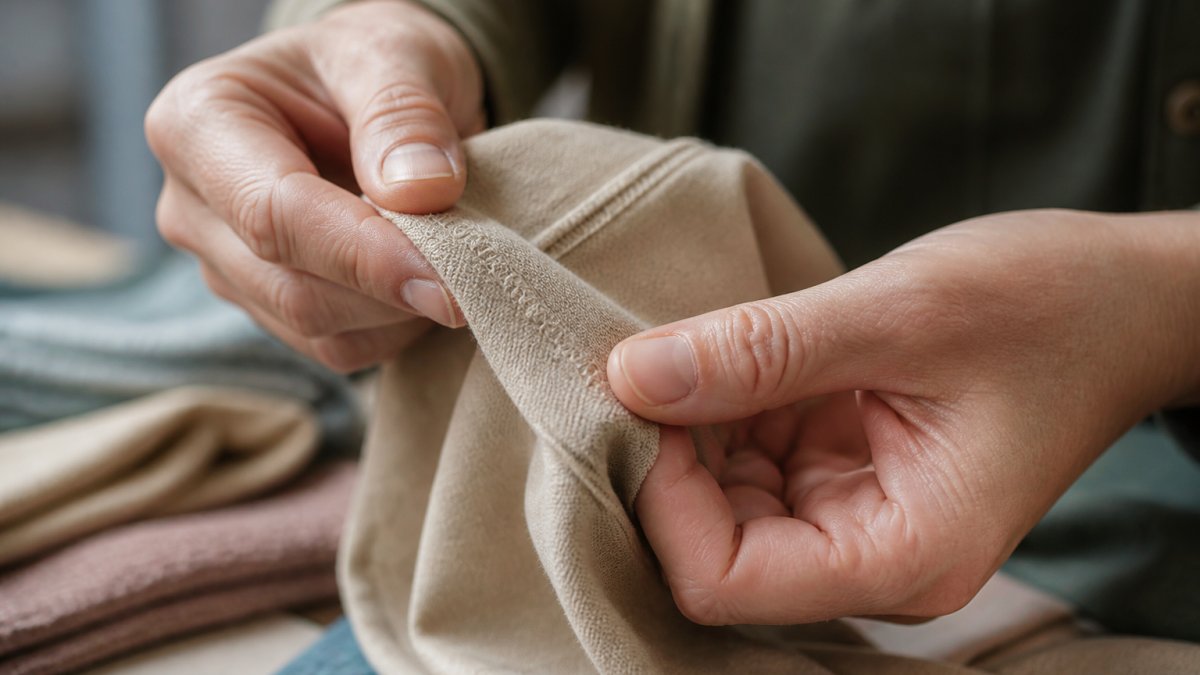
Quality handmade clothing shows itself through specific markers. Run your finger along the inside seams: they should be straight, even, and reinforced, with finished edges that won't fray.
Fabric weight and feel matter. Hold the garment to the light, you shouldn't see light passing through easily, and the fabric should feel soft but sturdy.
Hems and cuffs reveal attention to detail. Hems should be even, with invisible or intentionally decorative stitches, and cuffs should lie flat and hold their shape.
Button placement and reinforcement show craftsmanship: buttons attached with reinforced stitching on the back side, and buttonholes clean and functional rather than frayed or loose.
Seam allowances indicate experience. Experienced makers use half-inch to one-inch allowances for durability without bulk; inconsistent or too-narrow allowances suggest an inexperienced maker.
Ask about materials. Quality makers can name the fabric, its origin, and why they chose it. Vagueness is a warning sign; transparency shows confidence in quality.
Shop All →
Test the fit. Quality handmade clothing should fit well, and custom sizing is a positive sign, the maker adjusts for your body rather than forcing a standard size.
Cost Per Wear of Handmade Clothing: The Long-Term Value
Cost per wear is the real measure of whether handmade clothing is worth the investment. The formula is simple:
Cost per wear = purchase price ÷ number of times worn before the garment is retired
The hard part is the denominator. Most shoppers estimate wear counts from memory and overstate them; a more honest approach is to count how many times you actually reached for a comparable item in the past year, then multiply by the years you expect it to survive.
A worked example
Say you are comparing two hoodies. The mass-produced version costs $30 and the handmade version costs $80. You wear a hoodie roughly twice a week from October through April, about 56 wears per season.
| Mass-Produced | Handmade | |
|---|---|---|
| Purchase price | $30 | $80 |
| Wears per season | 56 | 56 |
| Expected seasons before replacement | 1-2 | 5-8 |
| Total wears | ~84 | ~392 |
| Cost per wear | ~$0.36 | ~$0.20 |
At those assumptions, the handmade hoodie costs roughly half as much per wear. But the result is sensitive to the inputs: wear the handmade hoodie only 20 times a year and its cost per wear rises above the mass-produced option, while a mass-produced hoodie lasting three seasons narrows the gap. The comparison only becomes meaningful once you plug in your own wear frequency and expected lifespan.
What actually drives the lifespan difference
Durability is not a single property. It comes from specific construction choices:
- Seam type and thread weight. Reinforced seams with heavier thread resist pulling. Lightweight serged seams on fast-fashion knits are the first thing to fail.
- Fabric weight and fiber content. A heavier cotton fleece holds its shape longer than a thin synthetic blend. Natural fibers like cotton, linen, and wool generally outlast cheap synthetics under repeated washing.
- Finishing details. Finished seam edges, reinforced button attachment, and stable hems all extend usable life.
- Repairability. A garment you can repair stays in rotation longer than one you have to replace.
Care and frequency of use
Two garments with identical construction can have very different cost-per-wear outcomes depending on how you treat them. Washing less often, in cold water, and air-drying instead of machine-drying extends the life of almost any garment, and handmade pieces often respond well because the maker chose the fabric with care.
Frequency of use cuts both ways. A handmade piece you love and wear constantly will have a low cost per wear. A handmade piece that sits in the closet because it does not fit your daily life will have a high one, which is why fit and versatility matter as much as construction.
Resale and repair as value recovery
Quality handmade clothing often retains resale value on secondhand marketplaces, and some vintage handmade pieces sell for more than their original price, while mass-produced items typically have little to none. Repair is the other lever: a maker who can re-stitch a seam or replace a zipper for a small fee effectively resets the garment's wear clock.
The takeaway
Cost per wear is not a slogan, it is a calculation you can run. Handmade clothing tends to win when the garment fits well, gets worn often, and lasts several seasons, and loses when the upfront price is high and the garment rarely leaves the closet. Before you buy, estimate your wear frequency, ask the maker about expected lifespan and repair options, and compare the resulting cost per wear against the cheaper alternative.
When Handmade Clothing Is Worth the Investment
Determining whether is handmade clothing worth the cost requires understanding when several conditions align. First, you value quality and durability over trends.
Personal fit matters. If you struggle with standard sizing, taller, shorter, broader, or shaped differently than average, handmade makers can customize fit, transforming a frustrating shopping experience into something that actually works for your body.
You appreciate uniqueness. If you care about wearing something distinctive rather than what everyone else owns, handmade clothing delivers originality and personal expression.
Sustainability is important to you. If you want to reduce your environmental footprint, handmade clothing aligns with that goal. Most handmade makers prioritize sustainable materials and ethical production. Mass production is inherently wasteful.
You support small business. Buying handmade means supporting individual makers and small studios. Many handmade makers donate portions of profits to causes they care about. At JK Creation Finds, we donate 1% annually to charitable causes.
Budget flexibility exists. Handmade clothing requires upfront investment. If you can afford to spend more per item, the long-term savings through durability make it worthwhile.
You want customization or personalization. Some handmade makers offer custom designs, monogramming, or modifications. If you want something specifically tailored to your preferences, handmade is the only option.
The maker's story resonates. Many people buy handmade because they connect with the maker's background, location, or mission. Knowing your clothes come from a Portland-based studio creating Pacific Northwest-inspired designs adds meaning that mass production can't match.
The question of whether is handmade clothing worth the cost ultimately depends on your priorities. At JK Creation Finds, we create handmade hoodies, t-shirts, and accessories designed to last years while celebrating the beauty of nature-inspired design. Our commitment to premium materials, careful craftsmanship, and sustainable practices means every piece is built for longevity and comfort. Learn more about sustainable fashion practices and how conscious choices impact both your wardrobe and the environment.
Frequently Asked Questions
Why is handmade clothing more expensive than mass-produced items?
Handmade clothing costs more because each piece requires skilled labor, quality materials, and individual attention. Mass production spreads costs across thousands of identical items, while handmade creators invest hours in a single garment. Materials for handmade items are often sourced individually rather than purchased in bulk, increasing per-unit costs. Additionally, small-batch production means no economies of scale, so labor and overhead are reflected in the final price.
Does handmade clothing last longer than mass-produced clothing?
Handmade clothing typically lasts longer when made with quality materials and proper construction. Handmade garments often feature reinforced seams, durable fabrics, and attention to detail that mass-produced items skip. However, longevity depends entirely on the maker's standards and materials chosen. A well-made handmade piece can last years with proper care, while a poorly constructed handmade item may not outlast cheaper mass-produced alternatives. Always inspect seams, fabric weight, and construction before purchasing.
How do I know if a handmade item is actually worth the price?
Assess handmade clothing by examining stitching quality, material feel and weight, and the maker's transparency about their process. Request information about fabric sourcing, production time, and care instructions. Check for consistent seams, secure buttons, and reinforced stress points. Read reviews from previous buyers about durability and fit. Calculate cost per wear over time. Quality handmade pieces justify higher upfront costs through longevity.
What should I look for when buying handmade clothing online?
Look for makers who provide detailed photos of stitching, seams, and material close-ups. Check their return policy and shipping practices. Verify they use quality fabrics and can explain their material choices. Ask about production timelines and whether custom orders are available. Read customer reviews specifically mentioning durability and fit accuracy. Prefer makers who share their story and production process, as transparency signals confidence in their work. Ensure sizing information is detailed and consider ordering a size up if uncertain.

