

Table of Contents
- Why Artists Choose Alternatives to Flourishmoon
- Print-on-Demand vs. Independent Custom Art Studios
- Key Factors for Selecting a Custom Art Alternative
- Nature Inspired Wall Art for Bedrooms and Living Spaces
- Independent Home Decor Brands That Prioritize Authenticity
- Sustainability and Eco-Friendly Materials in Custom Art Production
- Making Your Decision: Custom Art Platform Comparison
- Frequently Asked Questions
Last Updated: October 4, 2026
Why Artists Choose Alternatives to Flourishmoon
Finding the right platform for custom art alternatives can feel overwhelming. Artists and designers face real trade-offs between marketplace convenience, creative control, and profit margins. A flourishmoon alternative for custom art isn't just about switching platforms, it's about aligning your business model with how you actually want to work.

The core issue: many print-on-demand marketplaces handle fulfillment and customer service, but they take a significant cut. Independent artists often discover they're earning less than they expected because commission structures eat into their margins. This is where exploring alternatives makes sense. Whether you're selling fine art reproduction, giclee prints, or custom product creation, the platform you choose determines how much creative freedom you have and how much money you keep.
At JK Creation Finds, we understand this tension. Below, we'll walk you through the key factors that separate a good custom art platform from one that drains your time and profits.
Print-on-Demand vs. Independent Custom Art Studios
The fundamental choice comes down to this: do you want automated fulfillment or direct control?
Print-on-demand platforms handle production, shipping, and customer service. You upload designs, set prices, and the platform manages everything else. The trade-off is clear: convenience costs margin. Most POD services take 40-60% of the retail price before you see a dime. Your role becomes design and marketing only.
Independent custom art studios operate differently. You control production, pricing, inventory management, and customer relationships. This requires more operational work, you're managing fulfillment services, handling returns, and coordinating with suppliers. But your profit margins are yours to keep. An independent studio selling directly can retain 70-80% of revenue after material costs.
The choice depends on your priorities. If you want to focus purely on creative work and don't mind lower per-unit profit, a POD marketplace handles scaling. If you want to build a brand, control quality, and maximize earnings, independence requires more overhead but delivers better returns.
Many artists find a hybrid approach works best: maintain a direct storefront for your best-selling designs while using POD for experimental or lower-volume pieces. This spreads risk and lets you test different product categories without full inventory commitment.
Key Factors for Selecting a Custom Art Alternative
Choosing between platforms means evaluating several concrete dimensions. Not all alternatives weight these equally, so understanding what matters to your specific situation is critical.
Quality Control and Material Standards
Your reputation lives or dies on product quality. This is where custom art production gets technical.
When you work with a POD service, you're trusting their supplier network. You can request sample testing before going live, but you can't control their paper quality, ink formulation, or color accuracy.
Independent studios give you direct oversight. You specify archival materials, test color accuracy against your original files, and inspect samples before shipping to customers.
The practical step: request physical samples from any platform before committing. Print the same design across multiple materials (canvas, fine art paper, metal). Compare color, texture, and durability. This single step prevents costly mistakes.
Profit Margins and Commission Structures
Commission structures determine whether your business survives or thrives.
Print-on-demand marketplaces typically charge:
- Base product cost (set by the supplier)
- Platform commission (15-30%)
- Payment processing fees (2-3%)
Independent custom art production flips the math. You buy materials at wholesale pricing, handle production or coordinate with a fulfillment service, and keep the difference.
The catch: you need enough volume to justify the operational overhead.
Hidden fees matter too. Some platforms charge setup fees, design revision fees, or rush processing fees. Read the fine print carefully. A platform advertising "low commissions" might recoup margins through hidden charges.
Shipping, Fulfillment, and Turnaround Times
Speed and reliability directly impact customer satisfaction.
POD platforms handle shipping but often take 5-10 business days to produce and ship. If a customer orders on Monday, they might not receive their piece until the following week. For gift-givers or time-sensitive orders, this creates friction.
Independent fulfillment services offer more flexibility. You can negotiate faster turnaround times, offer expedited options, and control the customer experience.
Scenic mountain heart t-shirt, Unique heart-shaped mountain design, Nature →
Shipping costs vary wildly. Heavy items like canvas prints or framed pieces get expensive fast. POD platforms often absorb some shipping costs in their pricing model, but you don't see those costs, they're hidden in the commission structure.
Nature Inspired Wall Art for Bedrooms and Living Spaces
Custom art for residential spaces has specific requirements that differ from commercial or gallery work.
Bedroom and living room art needs to work with existing decor, lighting, and scale. A piece that looks stunning in a gallery can feel overwhelming or disconnected in a home environment. This is where custom art shines, clients can specify dimensions, color palettes, and subject matter that matches their space exactly.
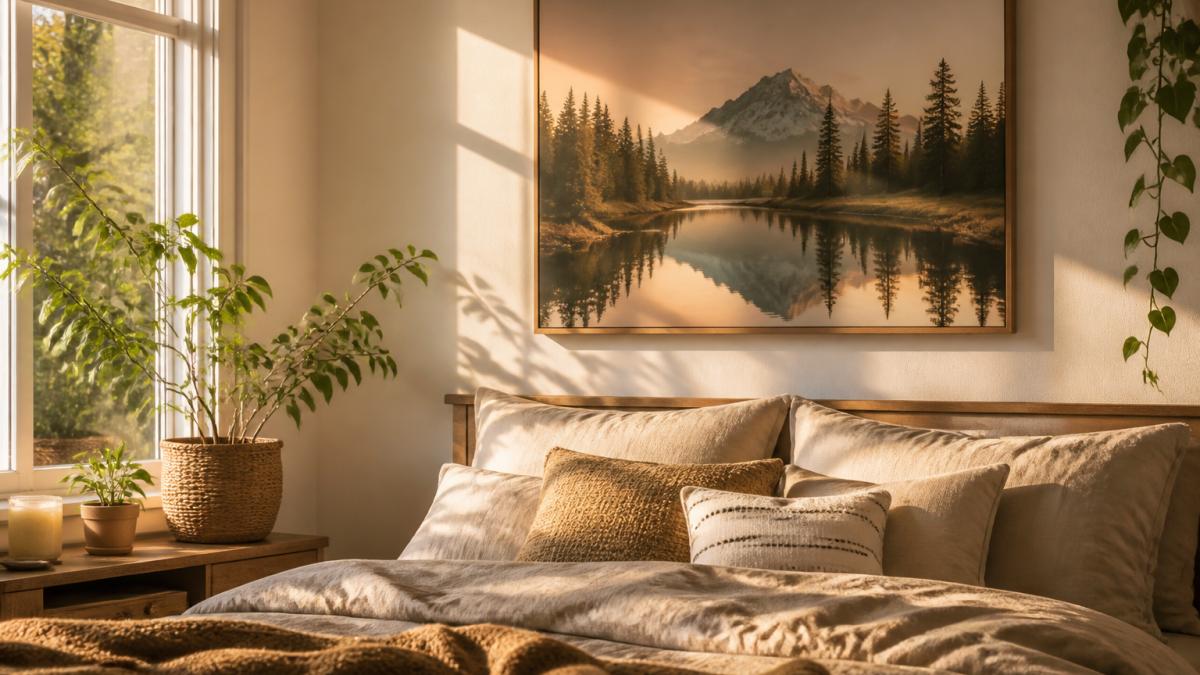
The market for bedroom art is strong because people invest emotionally in their personal spaces. A custom mountain landscape, forest scene, or botanical print becomes part of daily life.
When selling nature-inspired wall art, focus on authenticity. Customers can sense whether designs come from genuine passion or trend-chasing. Art that reflects real places, real light, and real seasonal changes resonates. Generic nature templates feel flat by comparison.
Customization options matter here too. Offering clients the ability to specify dimensions, add personalized text, or adjust color tones dramatically increases conversion.
Independent Home Decor Brands That Prioritize Authenticity
Authentic independent brands tell a story. They explain their creative process, share their inspiration, and connect with customers as individuals rather than transactions.
When customers choose an independent brand, they're often choosing the creator. They want to support someone whose work they believe in, not a faceless platform. This is your competitive advantage over POD marketplaces. Your brand identity, your voice, and your creative vision become the product.
Building this authenticity requires consistency. Your design aesthetic should be recognizable across products. Your communication should be genuine, no corporate-speak or mass-market positioning. Your customer service should feel personal. When someone reaches out with a question or concern, they're talking to you, not a support ticket system.
JK Creation Finds operates from this principle. Every design reflects the Pacific Northwest landscapes and nature inspiration that drove the business from day one. That specificity, rooting designs in a real place and real passion, is what separates authentic brands from generic alternatives.
Sustainability and Eco-Friendly Materials in Custom Art Production
Conscious consumers increasingly expect sustainable practices. This is no longer a niche preference, it's becoming table stakes.
Print-on-demand platforms vary widely in their environmental commitments. Some use soy-based inks and recycled paper. Others still rely on conventional production methods. If sustainability matters to your brand, you need direct control over material sourcing.
Independent custom art production lets you specify eco-friendly materials: archival paper from sustainable sources, water-based inks, recyclable packaging, and carbon-neutral shipping options. These choices cost slightly more upfront but appeal directly to your target market. Customers willing to pay premium prices for custom art often also care about environmental impact.
The practical angle: use sustainable materials as a marketing advantage, not a cost burden. Customers understand that premium materials cost more. When you explain your choices, why you selected a specific paper stock, why you use recycled packaging, why you offset shipping carbon, that transparency builds trust.
Making Your Decision: Custom Art Platform Comparison
| Factor | Print-on-Demand Marketplace | Independent Studio | Best For |
|---|---|---|---|
| Profit Margin | 25-35% | Higher earnings | |
| Operational Work | Minimal | Significant | Hands-off vs. control |
| Quality Control | Limited | Complete | Premium positioning |
| Turnaround Time | 5-10 days | Speed-sensitive orders | |
| Customization Options | Standard | Personalized products | |
| Customer Relationships | Marketplace-mediated | Direct | Brand loyalty |
| Sustainability Control | Limited | Complete | Eco-conscious positioning |
| Startup Effort | Low | High | Time investment |
| Scaling Flexibility | Automatic | Manual | Growth trajectory |
The comparison reveals a clear pattern: POD platforms excel at low-friction entry and automatic scaling. Independent studios excel at margin, control, and brand building.
Your choice depends on your stage and priorities. Early-stage artists testing designs benefit from POD's simplicity.
The decision between a flourishmoon alternative for custom art and other platforms ultimately comes down to what you value most: convenience or control, passive income or active engagement, platform reach or brand ownership. At JK Creation Finds, we've chosen the path of direct relationships, quality control, and authentic brand building. If that resonates with how you want to build your creative business, explore platforms that give you the same level of ownership and creative freedom. Shop our collection of customizable nature-inspired apparel and art to see what's possible when you prioritize authenticity over marketplace convenience.
Frequently Asked Questions
What are the main differences between Flourishmoon and independent custom art studios?
Flourishmoon operates as a marketplace platform connecting artists with buyers, while independent studios like JK Creation Finds handle design, production, and fulfillment directly. Independent studios typically offer greater control over quality, faster communication, and direct support from the creators. Marketplace platforms provide broader artist selection but may involve longer turnaround times and less direct artist involvement. Independent studios often provide personalized customization options and transparent production methods that larger platforms cannot match.
How do I know if a custom art alternative offers quality materials and archival standards?
Look for specific material specifications: acid-free paper, UV-resistant inks, and canvas weight ratings. Ask about color accuracy testing and sample availability before committing to large orders. Check customer reviews for feedback on how products hold up over time. Independent studios often provide detailed technical specs and are willing to discuss material choices directly with customers, giving you confidence in quality.
What should I expect in terms of profit margins when selling custom art through different platforms?
Direct-to-consumer sales through independent studios allow for higher margins but require managing inventory, production, and fulfillment yourself. Understanding each platform's fee structure, including transaction fees and payment processing costs, is essential for calculating your actual profit per sale.
How long does custom art production typically take, and which alternatives offer the fastest turnaround?
Print-on-demand services typically deliver within 5-10 business days after order confirmation. If you need faster delivery, look for studios that offer expedited options or pre-made designs. Always confirm turnaround times before ordering, especially for gifts with specific deadlines.

